


UCLA DLAM BCS & Transnetyx Colony + AMI
UCLA DLAM has chosen to partner with Transnetyx to provide you with tools and resources to assist DLAM Breeding Colony Services (BCS) manage your colonies effectively and responsibly, in keeping with the 3Rs of research.
Transnetyx’s cloud-based colony management software, aptly named Colony, manages your mouse records, genotype information, breeding and litter records, and inventory of your mouse lines for colonies managed by DLAM BCS. As part of DLAM’s commitment to resource efficiency, all labs currently supported by DLAM BCS can benefit from the powerful tools and features in Colony+AMI (Artificial Mouse Intelligence), helping you identify ways to reduce waste from unnecessary breeding, low-density cages, or excess stock cages and increase your research output, decrease your costs, or both!
We have provided you with the tools that will allow you to track these inefficiencies in real time and encourage you to promptly take action. If you have any UCLA DLAM BCS procedural questions, please reach out to DLAMBCS@mednet.ucla.edu.

Why Transnetyx
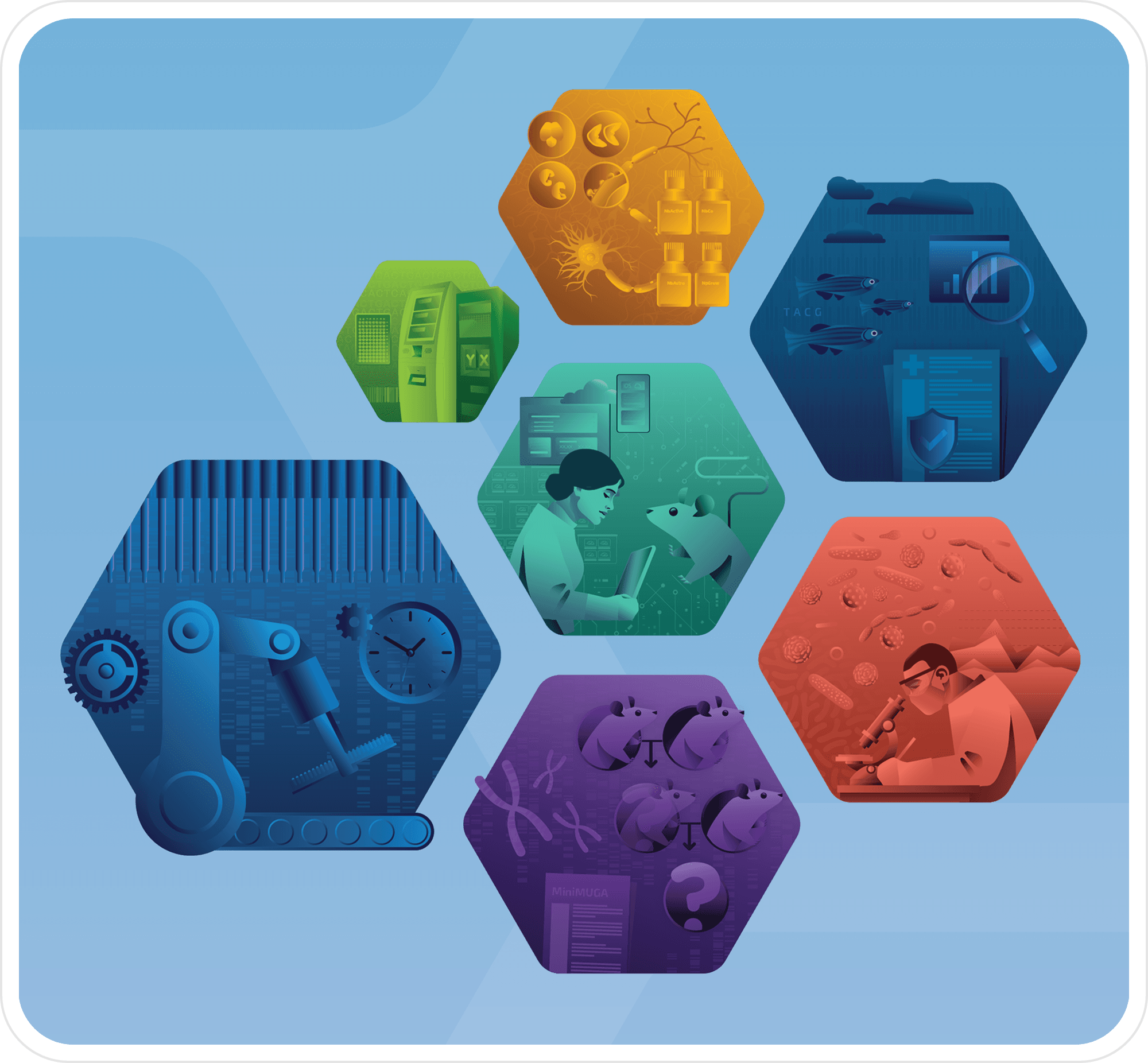
Transnetyx is uniquely positioned to help individual research labs and institutions align with policy-driven frameworks, including the New Approach Methodologies (NAMs), the 21st Century Cures Act, and the NIH Gold Standard. Through a broad portfolio of products and services that support scientific rigor and the 3Rs, Transnetyx empowers researchers to reduce waste, advance research, and adopt a more modern, data-driven approach to study design and reporting.
Testimonials from UCLA researchers

Our lab regularly checks for excess cages on a weekly basis and the AMI evaluation function has been especially useful to identify these cages as well as older breeding cages including those with long breaks between litters.
Juan - Lab Manager & Research Associate
AMI has been an extremely valuable resource that has helped me to assess which breeders are still viable and which have aged out and need to be culled. This allows for the possibility of more productive breeding pairs in regards to project timelines. The user friendly software makes it easier to submit request forms to DLAM.
Emily - Lab Manager & Research Associate
One of the pain points of using the request form is that I have to manually identify the mice or cages that need to be culled due to old age or lack of space and type it onto the request form. It was great to see how AMI automatically assessed my colonies with a few clicks to establish the filters to find mice that could be removed from the colony.
Allen - PhD Grad Student Research Associate
Steps your lab can take to reduce cages
Login to your Transnetyx Colony group often (at least 2-4 weeks minimally).
Please watch the introduction video Introduction to Colony+AMI.
When action is needed, submit request appropriately (batch requests whenever possible:
i. All breeding and Cull requests must be submitted through Colony AMI using the Request Task feature.
ii. All other requests are emailed to DLAMBCS@mednet.ucla.edu with sufficient detail about the cages, mice, and requested action for BCS staff to clearly identify and complete the request. PI Request Forms are no longer accepted.
Request task feature - tutorial

How to leverage AMI’s evaluation to reduce cages
Colony AMI Evaluation for UCLA Labs
Creating and Exporting Aged Out Mice Report and Tracking Cull List
Taking Action on Excess Stock Cages
Activate your Breeding Plans in the AMI Project Planner
Predictive analytics
Colony AMI Project Planner
Colony AMI Notifications Hub
Colony AMI Pedigree Tree
Want more from your Colony?
Transnetyx Support Hub
AMI - Learn how Colony+AMI (Artificial Mouse Intelligence) can transform your lab’s productivity, efficiency, and accuracy through breeder alerts, pedigree draw tool, colony evaluation and cage consolidation suggestions, and a robust project planning tool.
Mice - Learn how to view and sort your mouse records quickly and efficiency and how to leverage Colony+AMI’s sophisticated and customizable data tables for your analysis and reporting needs.
Genotyping - See how Transnetyx’s Automated Genotyping service seamlessly integrates with Colony+AMI to make placing orders, reviewing results, and assigning genotypes quick and easy while eliminating recording errors.
Breedings - Learn how to request breedings, view active and retired breeding records, and how to use Colony for tracking times matings and embryo harvests.
Support HubArtificial Mouse Intelligence
More science in every cage.
Manage your colony more efficiently with less effort. Based on your research goals and resources, AMI will:

Guide you to a more efficient cage footprint.
Reduce the number of animals housed over the course of your project.
Optimize your production of viable experimental subjects.

Transnetyx Artificial Mouse Intelligence
Questions? We are here to help!
Contact the Software Implementation Team
For Technical Support | Email: colony@transnetyx.com

Meosha Hudson